The first cuts
From Pattern to Hide
A bag begins as a set of shapes on paper. Those shapes are then laid onto hide or cloth, and the cut has to respect the grain, the marks, and the thickness of the material.
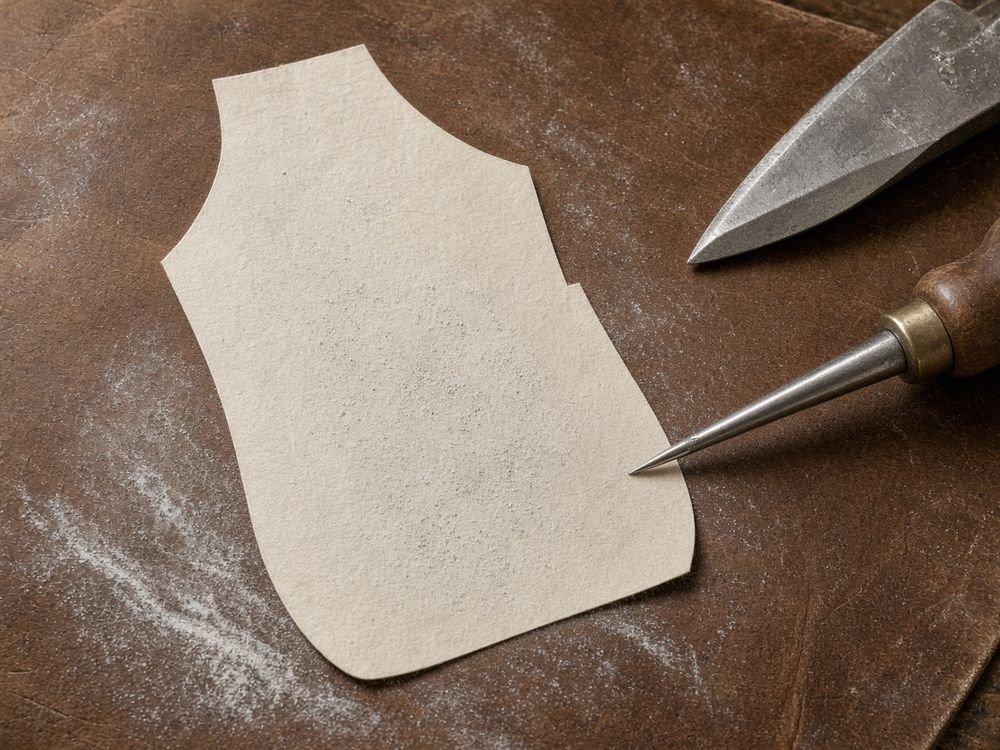
Laying out the plate
A careful layout wastes less hide and keeps the grain running the way the pattern asked. Marks that looked abstract on paper become practical the moment a knife is in the hand: a notch that will have to meet another notch, a seam allowance that cannot be skimped.

Thinning an edge
Skiving is the work of thinning a hide where two edges will meet or where an edge will turn. Done well, it disappears into the finished join. These pages describe that work so a reader can recognise it, not so that a bench can be run from a screen.